
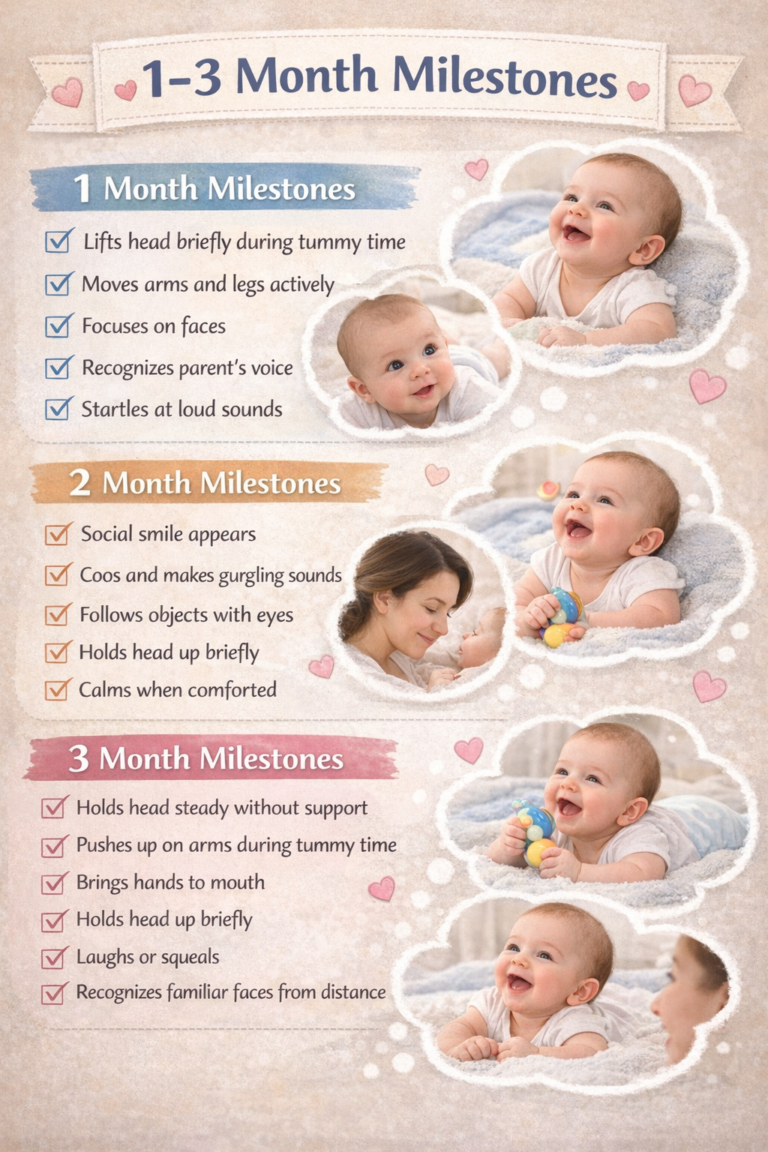


The first three months with your newborn are beautiful, emotional, and sometimes overwhelming. This newborn first 3 months care guide will walk you through feeding, sleep, hygiene, safety, development, and milestone tracking — step by step — so you feel confident and prepared.
The first 90 days are often called the “fourth trimester”. During this time, your baby adjusts to life outside the womb. Growth is rapid, sleep patterns are irregular, and bonding becomes the foundation for emotional security. newborn first 3 months care guide
1. Feeding Your Newborn (0–3 Months) newborn first 3 months care guide
Feed every 2–3 hours
8–12 feeds in 24 hours
Feed on demand (look for hunger cues)
Rooting (turning head searching for breast)
Sucking hands
Lip smacking
Crying (late sign)
Ensure proper latch (baby’s mouth covers most of the areola)
Baby’s chin should touch the breast
You should hear swallowing sounds
Feed 10–20 minutes per side
60–90 ml per feed initially (increases gradually)
Always hold baby during feeding
Burp after every feed
Day 1–2: 1–2 wet diapers
After Day 5: 6–8 wet diapers daily
2. Newborn Sleep Guide (0–3 Months) newborn first 3 months care guide
Newborns sleep 14–17 hours per day, but in short stretches of 2–4 hours. newborn first 3 months care guide
Always place baby on their back
Use a firm mattress
No pillows, blankets, soft toys
Room sharing is recommended (not bed sharing)
Swaddle (if baby isn’t rolling yet)
White noise
Keep lights dim at night
Daytime exposure to natural light
3. Diapering & Hygiene newborn first 3 months care guide
Every 2–3 hours
Immediately after poop
Wash your hands
Clean front to back (especially for girls)
Let skin air dry
Apply diaper rash cream if needed
Secure diaper comfortably (not too tight)
Frequent changes
Keep area dry
Avoid scented wipes
4. Bathing Your Baby
2–3 times per week is enough
Sponge bath until umbilical cord falls off
Gather all supplies first
Check water temperature (lukewarm)
Support baby’s head and neck
Use mild baby soap
Pat dry gently (don’t rub)
5. Umbilical Cord Care newborn first 3 months care guide
Keep it clean and dry
Fold diaper below stump
It usually falls off in 1–3 weeks
Call doctor if redness, pus, or foul smell appears
Every baby develops at their own pace. These are general guidelines.
Morning
Feed → Burp → Diaper → Tummy time → Sleep
Afternoon
Feed → Play (talk/sing) → Diaper → Nap
Evening
Feed → Bath (if scheduled) → Gentle massage → Sleep
Contact your pediatrician if:
"Community support can ease parenting challenges through local parenting groups, shared childcare, and educational workshops. Access to mental health resources, financial advice, and after-school programs also helps. By fostering a network of support, communities can create a nurturing environment for both parents and children."
"Parents often juggle work-life balance, managing finances, and ensuring their children's health and education. They face challenges like finding quality childcare, dealing with behavior issues, and navigating their own stress and fatigue. Support and understanding from the community can make a significant difference in their daily lives."
Parenthood is a transformative journey filled with moments of immense joy and occasional challenges. It's a role that demands patience, understanding, and a whole lot of love. While there's no definitive handbook for parenting, there are some quick tips that can guide you through this rewarding adventure.